Featured in the SME’s Aerospace & Defense Industry Report, 2025
The landscape has completely shifted in the manufacturing industry. The train is leaving the proverbial station – and we need you on it.
Our great nation depends on the aerospace and defense sector. It alone accounts for 2-3% of the total U.S. GDP. But it’s so much more than that – it’s our defense, our protection, and our freedom. Our troops rely on our ability to output quality consistently. It isn’t about a revenue metric to them – it’s about their livelihood. Our work matters – it’s more than just a business.
Yet, shifts in technology, demographics, and industry needs paired with societal trends leave us at a crossroads. Today, 50% of manufacturing organizations report talent retention challenges leading to a projected shortage of 2.1 million manufacturing jobs in the U.S. by 2030. The aerospace and defense markets feel these challenges acutely. The market for highly skilled workers in engineering, skilled trades, and advanced manufacturing techniques isn’t immune to this new reality. And this reality prompts a vicious cycle. Poor retention leads to unfilled vacancies. Unfilled vacancies drive acquisition challenges, place undue burdens on an overwhelmed workforce, and ultimately lead to more departures. This deteriorates our bottom lines, stalls our efficiency, and limits our potential and ability to accomplish our crucially important mission.
Welcome to the new age of manufacturing. When the market provides greater employment opportunities than available employees, your organization must provide a compelling reason for people to join and stay. There will always be another place willing to pay more, an easier job that’s more attractive. You have to give yourself and your organization a competitive advantage. How do you do that? You create an environment that is one-of-a-kind. You create a culture people are desperate to be a part of.
70-80% of the people in our organizations are led by frontline supervisors and mid-level managers. This intersection is where our organizational cultures form. If you want a culture that attracts and retains, you must empower your frontline leaders to intentionally cultivate it. Yet, most organizations don’t. And that’s exactly why we are struggling today.
An attractive culture is a direct byproduct of the quality of our frontline leaders. Great new leaders and managers don’t magically appear. We create them. We develop them. We nurture them. Great leaders develop great leaders. And in turn, they collectively build great organizations that thrive.
Here’s why we struggle: lower-level leader development is often one-dimensional at best. It isn’t strategic. It isn’t woven into the fabric of our companies, nor is it designed with purpose or intention. Rather, it’s detached and isolated. It isn’t a priority, so it doesn’t produce results. Our frontline leaders are left to navigate a new world on their own – resulting in the frustration and disengagement that culminates in poor retention, productivity, quality, and more.
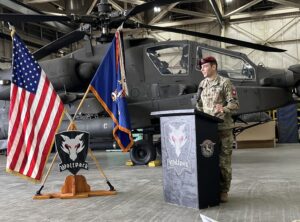
As an Apache pilot, I was trained to succeed. And rightfully so. If you make a mistake in the cockpit, lives are in danger. As a result, the training and development is intense and endless. It’s designed to create the best possible aviators. It’s the epitome of professionalism. And it works. So, the question is – why do we treat leadership any different?
Here’s how you can turn the guiding principles of professional aviation into strategic steps that will begin to transform your organization:
- First, embrace a mindset of professional leadership. You wouldn’t trust a pilot without wings, so permeate this mindset across your leadership as well. Professionals cultivate professional skillsets that create professional results. Let this belief guide how leaders operate at every level of your organization – especially at the lowest levels.
- Second, development is a process not a stand-alone program or event. Pilots are intimately familiar with the concept of progression – the continuous journey of growth and development throughout their careers. Progression is a vital function of any profession. Model your programs around continuous growth and improvement leveraging structure, guidance, and community. This is how we transform our organizations into leader development incubators.
- Third, create a climate centered around serving, empowering, and developing the frontline leader. The aviation industry is operated by junior pilots, not senior ones. A majority of senior pilot roles are instructional or developmental in nature. Nearly every profession follows this model. The result inevitably creates frontline leaders that supply your entire organization with purpose and clarity. What follows is an engaged workforce and a magnetic culture. You will attract and retain like never before.
Programs, trainings, and classes don’t develop great leaders – organizations and their senior leaders do. The quality of our leaders is ultimately the product of the environment we create. Your organizational ecosystem is the soil you plant your leader development within. It’s up to you to make it fertile.
People will forever be your greatest asset. That’s not just corporate legal jargon – it’s a proven principle. Regardless of the advancements we will continue to see in technology, our people will always be the foundation of our enterprise. Break free from the talent crisis by making them your priority. Give them the quality of life and purpose they desperately desire. Focus on serving them, and they will serve you well. This all hinges on our ability to give them great leaders. When we do, we will succeed. And we must succeed – our country and its people need us to.
Finally, consider hiring a veteran – someone who has lived the military’s mission-driven mindset. The demands of the military are intense – discipline, adaptability, composure, and expertise are all a must to thrive in the chaos of combat. Hiring a veteran is hiring someone who sees the big picture and is determined to get the job done.
Check out the full article at AdvancedManufacturing.Org:
https://www.advancedmanufacturing.org/industries/aerospace-defense/breaking-free-of-manufacturing-s-talent-crisis/article_be95f0e8-15f8-43b3-a5c8-ea014c253411.html